
Phonics Reading Drill Worksheets - Part 4: First Sentences & Short O
From Words to Sentences - Building Reading Confidence
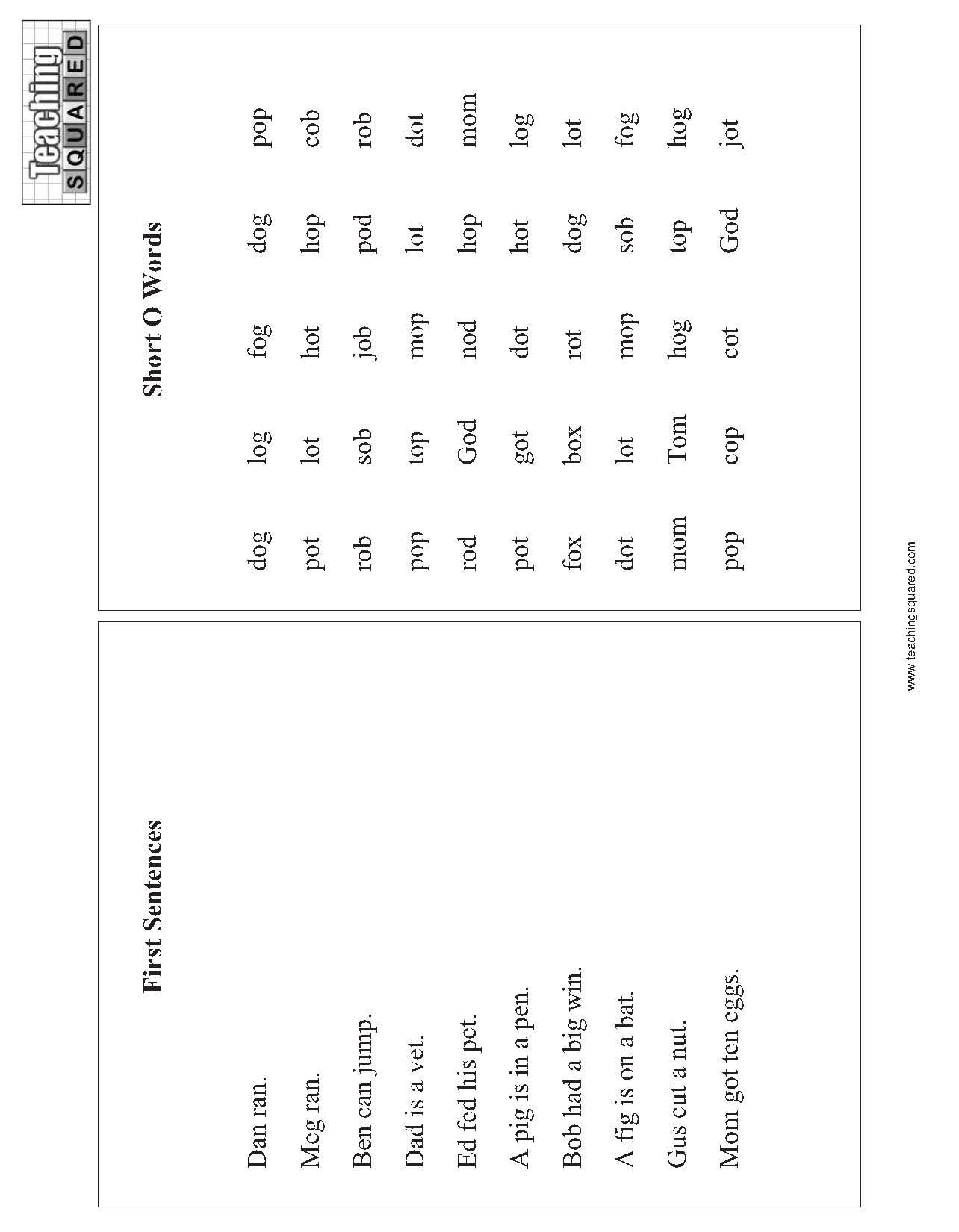
Bridging Words to Sentences with Short O Practice
This milestone worksheet marks an exciting transition in your student's reading journey - moving from individual words to complete sentences! Part 4 combines short O vowel practice with first sentence reading, helping students apply their phonics knowledge in context. This dual focus builds both decoding skills and reading comprehension.
What's Featured in This Worksheet:
- Short O Word Practice: Focus words like "hot," "dog," "top," "pot," and "log"
- Short O Word Families: -op, -ot, -og, -ob patterns
- First Sentences: Simple 3-5 word sentences using learned phonics patterns
- Decodable sentences featuring short vowel words
- Sight word integration in sentence context
- Picture cues to support comprehension
- Punctuation awareness (capitals and periods)
Learning Benefits:
- ✓ Introduces short O sound to complete the vowel collection
- ✓ Transitions from word-level to sentence-level reading
- ✓ Builds reading fluency through connected text
- ✓ Develops comprehension alongside decoding skills
- ✓ Reinforces left-to-right reading progression
- ✓ Introduces basic punctuation concepts
- ✓ Boosts confidence with achievable sentence structures
Teaching Short O and First Sentences
Short O Sound: Teach students that short O sounds like "ah" as in "octopus" or "olive." The mouth forms a round shape, like saying "oh" but shorter. Reference words: ox, octopus, olive. Hand gesture: Make a circle with thumb and fingers to show the round mouth shape.
Sentence Reading Strategy: Introduce the concept of reading sentences by showing how words work together to tell us something. Start by pointing to each word as you read, then have students track with their finger. Emphasize starting with a capital letter and ending with a period.
First Sentence Examples on This Worksheet
Sentences progress from simple to slightly more complex:
- "The dog is hot." (4 words, CVC + sight words)
- "I see a frog on a log." (7 words, rhyming words)
- "The pot is on top." (5 words, short O focus)
- "Bob has a red dot." (5 words, mixed vowels)
Teaching Tips for Success
Pre-Reading Activities:
- Review all short vowel sounds (A, E, I, O) before starting
- Practice sight words that appear in sentences
- Discuss what makes a sentence (tells a complete thought)
- Model fluent sentence reading with expression
During Reading Support:
- Use finger tracking under each word
- Pause at periods to reinforce sentence boundaries
- Reread sentences for fluency after decoding
- Ask simple comprehension questions
Differentiation Strategies
For Beginning Readers: Focus on the short O words first, then move to sentences. Cover part of the sentence and reveal one word at a time.
For Advanced Students: Have them create their own sentences using short O words. Challenge them to illustrate the sentences they read.
For Struggling Readers: Provide sentence strips they can cut apart and reassemble. Use highlighting to distinguish between decodable and sight words.
Assessment Checkpoints
- Can student identify short O sound in isolation and within words?
- Does student track left to right when reading sentences?
- Can student identify sentence boundaries (capital and period)?
- Is student beginning to read with fluency rather than word-by-word?
Home Extension Activities
Parents can support sentence reading by creating simple books with their child using short vowel words. Write sentences about family members or pets. Play "sentence builders" with word cards. Most importantly, celebrate this huge milestone - your child is reading real sentences!
Help your student take the leap from words to sentences - download this pivotal worksheet today!