
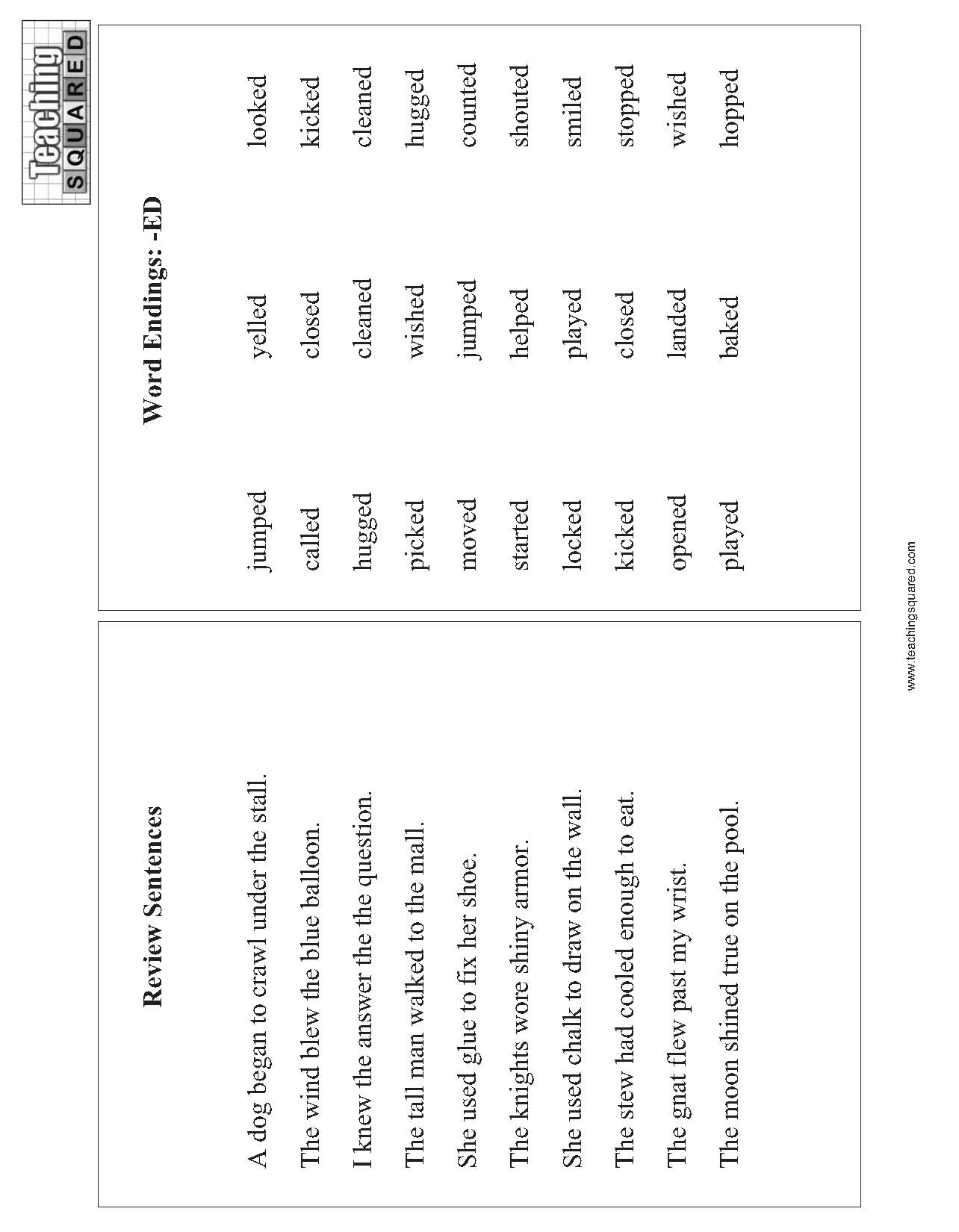
Phonics Reading Drill Worksheets - Part 24: Review Sentences & Word Endings -ED
The Three Sounds of -ED and Comprehensive Phonics Mastery
The Final Suffix: -ED's Three Personalities
This culminating worksheet introduces the most complex suffix pattern - the -ED ending that makes three different sounds depending on the base word. While the spelling is always -ED, the pronunciation changes to /ed/, /d/, or /t/. Combined with comprehensive review sentences, Part 24 demonstrates complete phonics mastery while teaching this essential pattern for reading past tense.
What's Featured in This Worksheet:
- -ED as /ed/ (extra syllable): wanted, needed, started, painted, landed
- -ED as /d/ sound: played, called, opened, seemed, pulled
- -ED as /t/ sound: jumped, walked, helped, asked, looked
- Rules for determining -ED pronunciation
- Past tense meaning and usage
- Review sentences with all phonics patterns
- Multi-syllable words with -ED endings
Learning Benefits:
- ✓ Masters the three sounds of -ED
- ✓ Develops automatic suffix recognition
- ✓ Understands past tense in reading
- ✓ Reviews all phonics patterns learned
- ✓ Builds fluency with complex endings
- ✓ Strengthens grammar awareness
- ✓ Completes essential phonics instruction
Understanding -ED's Three Sounds
Sound 1: /ed/ (Extra Syllable)
- After T or D: wanted, needed, started, landed
- Adds a syllable: want (1) → want-ed (2)
- Easiest to hear - sounds like "id"
- Memory tip: "T or D need-ED"
Sound 2: /d/ (Voiced Sound)
- After voiced sounds: played, called, opened
- After vowels: stayed, tried, glued
- Doesn't add a syllable
- Memory tip: "Smooth sounds get /d/"
Sound 3: /t/ (Voiceless Sound)
- After voiceless sounds: jumped, walked, helped
- After K, P, S, SH, CH: looked, stopped, missed
- Doesn't add a syllable
- Memory tip: "Sharp sounds get /t/"
Common -ED Words by Sound
/ed/ Sound (extra syllable):
- T endings: wanted, started, painted, visited, shouted
- D endings: needed, added, landed, decided, included
/d/ Sound:
- After vowels: played, stayed, enjoyed
- After L, N, R: called, cleaned, turned
- After voiced sounds: loved, lived, moved
/t/ Sound:
- After K: walked, talked, looked, asked
- After P: jumped, stopped, helped, dropped
- After S, SH, CH: missed, washed, watched
Comprehensive Review Sentences
- "Yesterday, I walked to school and talked with friends." (-ED as /t/)
- "She painted a picture and wanted to show everyone." (-ED as /ed/)
- "We played outside until it rained and thundered." (-ED as /d/ and /d/)
- "The teacher helped students who needed extra practice with words that ended in -ED." (all three sounds)
- "They jumped over puddles, splashed in water, and laughed at the funny sounds." (mixed -ED sounds)
- "Last night, the knight knocked on the door and asked for food because he had traveled far." (complex patterns + -ED)
Teaching the Three -ED Sounds
Listen First Approach:
- Say the word aloud - which sound do you hear?
- Count syllables - did -ED add one?
- Group words by sound, not spelling
- Practice common words in each category
Base Word Strategy:
- Look at the last sound of the base word
- T or D → /ed/ (extra syllable)
- Voiced sound → /d/
- Voiceless sound → /t/
Common Challenges
- Overpronouncing: Saying "walk-ed" instead of "walked" - practice natural speech
- Missing -ED: Not noticing the ending - emphasize past tense meaning
- Syllable Confusion: When to add syllable - focus on T/D rule
- Spelling Transfer: Three sounds, one spelling - emphasize reading first
Building Fluency with -ED
Pattern Practice:
- Read lists of words with same -ED sound
- Highlight -ED endings in different colors by sound
- Practice sentences with multiple -ED words
- Connect to storytelling (past tense narratives)
Differentiation Strategies
For Struggling Readers: Start with /ed/ sound (most obvious). Use hand signals for each sound. Practice base word + ending separately. Focus on high-frequency -ED words.
For Advanced Students: Explore irregular past tense (went, saw). Write stories using all three -ED sounds. Investigate why -ED has three sounds. Create -ED sorting games.
Assessment of Complete Phonics Skills
- Can student identify all three -ED sounds?
- Does student read -ED words fluently?
- Can student decode any phonics pattern learned?
- Is student ready for independent grade-level reading?
- Does student self-monitor and self-correct?
Real-World Reading Applications
-ED appears everywhere in past tense:
- Stories: "walked," "talked," "played"
- Instructions: "completed," "finished"
- Information: "discovered," "invented"
- Daily life: "worked," "helped," "started"
Celebrating Complete Phonics Mastery
With this final pattern, students have learned:
- All vowel sounds (short, long, r-controlled, diphthongs)
- All consonant patterns (blends, digraphs, silent letters)
- Essential suffixes (-S, -ES, -ING, -ED)
- Multiple spellings for same sounds
- Strategies for decoding any word
Ready for Independent Reading
Students completing this series can now:
- Read grade-level texts independently
- Decode unfamiliar words using multiple strategies
- Understand complex spelling patterns
- Read with fluency and expression
- Focus on comprehension over decoding
Complete your phonics mastery with -ED's three sounds - download this final essential worksheet!