
Phonics Reading Drill Worksheets - Part 19: Poems & Two-Syllable Words
Rhythm, Rhyme, and Multi-Syllable Mastery
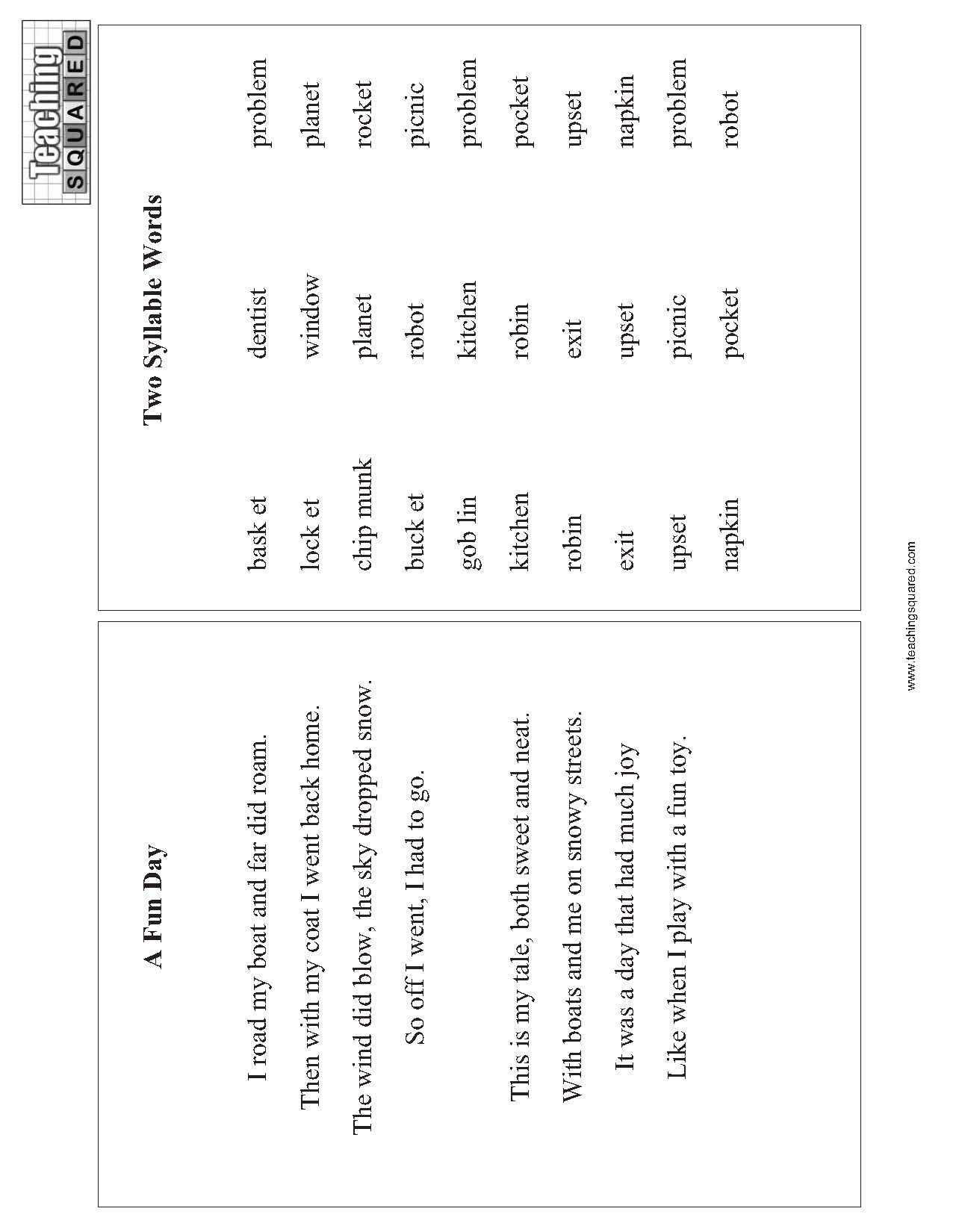
From Single Syllables to Poetry: A Reading Celebration
This transformative worksheet introduces two major advancements: reading poetry with expression and decoding two-syllable words. By combining these skills, students experience the joy of rhythmic reading while developing strategies for longer words. Part 19 celebrates phonics mastery through engaging poems that naturally incorporate two-syllable words, building fluency and confidence.
What's Featured in This Worksheet:
- Simple Poems: 4-8 line poems with rhyming patterns
- Two-Syllable Words: Common patterns like rabbit, happy, garden, window
- Compound Words: sunshine, rainbow, birthday, playground
- Syllable Division: VC/CV (rab-bit), V/CV (ti-ger), VC/V (lemon)
- Rhythm and expression in reading
- Rhyming word recognition
- Mixed phonics patterns in poetic context
Learning Benefits:
- ✓ Introduces multi-syllable word strategies
- ✓ Develops reading expression and fluency
- ✓ Builds appreciation for language rhythm
- ✓ Strengthens pattern recognition in longer words
- ✓ Enhances comprehension through context
- ✓ Celebrates reading achievement with poetry
- ✓ Prepares for chapter book reading
Understanding Two-Syllable Words
What is a Syllable? A word part with one vowel sound. Clap for each syllable: rab-bit (2 claps).
Common Two-Syllable Patterns:
- Closed Syllables: rab/bit, nap/kin, bas/ket (short vowel sounds)
- Open Syllables: ti/ger, pa/per, mu/sic (long vowel sounds)
- Silent E: cup/cake, sun/shine, base/ball
- Compound Words: rain/bow, birth/day, play/ground
- Vowel Teams: rea/son, trai/ning, floa/ting
Syllable Division Rules
Basic Guidelines:
- VC/CV: Divide between consonants (rab-bit, win-dow)
- V/CV: Divide after first vowel if it's long (ti-ger, pi-lot)
- VC/V: Divide after consonant if vowel is short (lem-on, cab-in)
- Compound: Divide between words (sun-shine, cup-cake)
Sample Poems with Two-Syllable Words
Poem 1: "The Garden"
In my garden, flowers grow,
Yellow, purple, row by row.
Butterflies dance in the air,
Happy children everywhere.
Poem 2: "Rainy Day"
Listen to the raindrops fall,
Splashing on my window tall.
After rain, a rainbow bright,
Colors dancing in the light.
Poem 3: "Animal Friends"
A rabbit hops across the ground,
A kitten makes a gentle sound.
The tiger sleeps beneath a tree,
While monkey swings so wild and free.
Teaching Poetry Reading
Expression Elements:
- Voice rises at exciting parts
- Pause at line ends (but not too long)
- Emphasize rhyming words
- Use different voices for characters
- Read with feeling and emotion
Pre-Reading Poetry:
- Find and clap two-syllable words
- Identify rhyming pairs
- Discuss what the poem might be about
- Practice tricky words first
Strategies for Two-Syllable Success
The Cover-Up Method: Cover the second syllable, read the first, then uncover and blend.
The Clapping Method: Clap syllables while saying the word to feel the breaks.
The Compound Method: Look for two smaller words inside (sun + shine).
The Pattern Method: Recognize common endings (-ing, -er, -ly, -ful).
Common Two-Syllable Words to Master
- Animals: rabbit, kitten, tiger, monkey, turtle, puppy
- Nature: garden, flower, rainbow, sunshine, water, mountain
- Actions: jumping, running, playing, singing, reading, writing
- Describing: happy, funny, little, yellow, purple, careful
- Places: bedroom, kitchen, playground, classroom, outside
Common Challenges
- Syllable Breaks: Dividing in wrong place - practice with clapping
- Vowel Sounds: Not sure if long or short - check syllable type
- Poetry Flow: Choppy reading - model fluent expression
- Compound Confusion: Not seeing two words - highlight each part
Building Fluency Through Poetry
Repeated Reading: Read the same poem multiple times for smoothness
Echo Reading: Teacher reads a line, students echo with expression
Choral Reading: Everyone reads together for confidence
Performance Reading: Students present poems to the class
Differentiation Ideas
For Struggling Readers: Start with compound words (two words they know). Use poems with more single-syllable words. Pre-teach all two-syllable words. Allow partner reading for support.
For Advanced Students: Find three-syllable words in poems. Write their own poems with two-syllable words. Identify different syllable patterns. Explore haiku or other poetry forms.
Assessment Points
- Can student identify syllables in spoken words?
- Does student decode two-syllable words accurately?
- Can student read poetry with appropriate expression?
- Is student recognizing rhyming patterns?
- Does comprehension remain strong with longer words?
Celebrating Reading Growth
This worksheet marks students' readiness for:
- Chapter books with multi-syllable words
- Poetry books and anthologies
- More complex informational texts
- Independent reading enjoyment
The Joy of Poetry
Poetry adds joy to phonics practice by providing:
- Natural rhythm that aids fluency
- Memorable patterns through rhyme
- Emotional connection to reading
- Celebration of language mastery
Celebrate reading success with poetry and two-syllable mastery - download this special worksheet!