
Phonics Reading Drill Worksheets - Part 18: TH, WH, QU & OI/OY Sounds
Advanced Digraphs and the /oy/ Diphthong for Complete Phonics Mastery
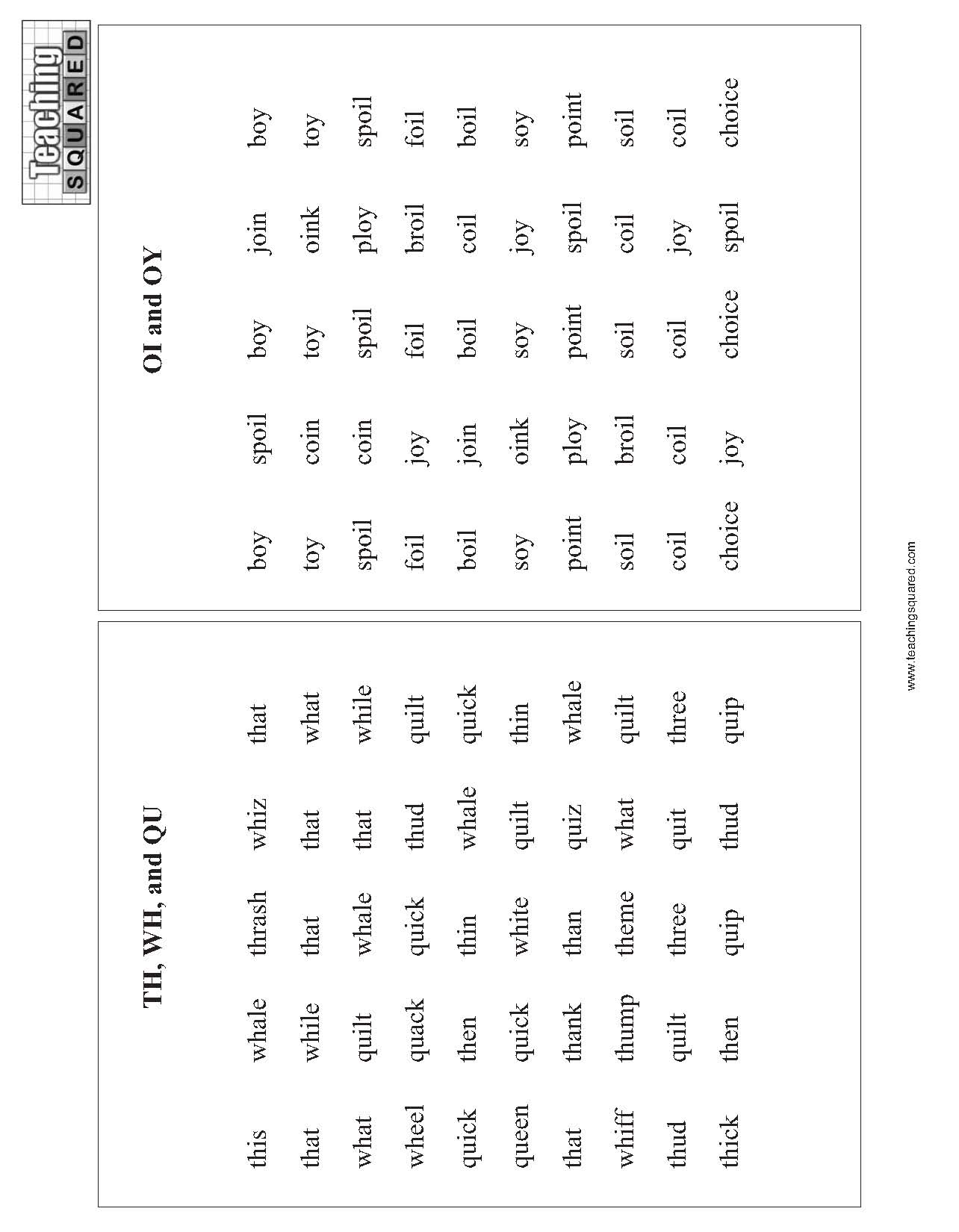
Completing Digraph Knowledge with Essential Patterns
This comprehensive worksheet introduces the final essential digraphs (TH, WH, QU) while teaching the OI/OY diphthong pattern. These high-frequency patterns appear in countless common words, making their mastery crucial for reading fluency. Part 18 develops advanced pattern recognition while addressing the complexities of TH's two sounds and the positional rules for OI/OY.
What's Featured in This Worksheet:
- TH Digraph (voiced): the, this, that, then, them, mother, father, other
- TH Digraph (voiceless): think, thank, three, bath, math, teeth, both
- WH Digraph: what, when, where, why, which, white, whale, whisper
- QU Pattern: quick, quiet, quit, queen, question, square, squirrel
- OI Diphthong: oil, coin, point, voice, choice, noise, join
- OY Diphthong: boy, toy, joy, enjoy, royal, destroy, employ
- Mixed sentences with all patterns
Learning Benefits:
- ✓ Completes essential digraph instruction
- ✓ Masters high-frequency sight words with TH
- ✓ Develops awareness of voiced/voiceless sounds
- ✓ Teaches the /oy/ diphthong with position rules
- ✓ Builds question word recognition (WH)
- ✓ Strengthens pattern-position relationships
- ✓ Prepares for independent reading
Understanding the Digraphs
TH - The Two-Sound Digraph:
- Voiced TH: Vocal cords vibrate (the, this, mother)
- Voiceless TH: Just air, no vibration (think, math, teeth)
- Put hand on throat to feel the difference
- Most common words use voiced TH
WH - The Question Helper:
- Makes /hw/ or just /w/ sound (varies by region)
- Appears in most question words
- Sometimes called "the whistling digraph"
- Memory tip: "WH asks questions - What? When? Where?"
QU - The Inseparable Pair:
- Q is always followed by U in English
- Makes /kw/ sound
- Acts like a digraph though technically not one
- Memory tip: "Q and U are glued together"
The OI/OY Diphthong
Position Rules:
- OI: In the middle of words (oil, coin, voice)
- OY: At the end of words (boy, toy, joy)
- Both make the same /oy/ sound
- Similar pattern to AI/AY position rules
High-Frequency Words to Master
Essential TH Words:
- Articles/Pronouns: the, this, that, they, them, their
- Family: mother, father, brother
- Numbers: three, thirteen, thirty
- Actions: think, thank
Question Words (WH):
- what, when, where, why, which, who
Sample Sentences with Mixed Patterns
- "What is that noise the boy heard?" (WH, TH, OI, OY)
- "The queen thinks her voice is quite royal." (TH, QU, OI, OY)
- "Which toy will they enjoy at the party?" (WH, OY, TH)
- "My mother will join us when we play with the white coins." (TH, OI, WH)
- "Why did the three boys destroy the quiet toy?" (WH, TH, OY, QU)
- "This quick squirrel made a choice to whisper." (TH, QU, OI, WH)
Teaching Strategies
For TH Sounds:
- Start with voiced TH (more common)
- Use mirrors to show tongue position
- Practice with hand on throat
- Sort words by TH sound type
For OI/OY:
- Teach position rule explicitly
- Compare to AI/AY pattern
- Use "boy" and "coin" as anchor words
- Practice the gliding vowel movement
Common Challenges
- TH Substitution: Students say /f/ or /d/ instead - show tongue placement
- Voiced/Voiceless Confusion: Don't worry about perfection - exposure helps
- QU Separation: Students try to sound out Q alone - always teach as unit
- OI/OY Position: Mixing up which to use - create position charts
Advanced Pattern Recognition
Help students notice:
- TH appears in many sight words
- WH starts question words
- QU often begins words
- OI/OY follows predictable position rules
Differentiation Approaches
For Struggling Readers: Focus on voiced TH in sight words first. Teach WH question words as a group. Practice OI and OY separately before mixing. Use visual cues for tongue placement.
For Advanced Students: Explore TH in different positions (initial, medial, final). Find exceptions to patterns. Create sentences using all patterns. Research why English has two TH sounds.
Assessment Guidelines
- Can student read common TH sight words automatically?
- Does student recognize WH in question words?
- Can student decode QU patterns smoothly?
- Is student applying OI/OY position rules?
- Does student maintain fluency with these complex patterns?
Real-World Applications
These patterns appear everywhere:
- Daily conversation: the, this, that, what, when
- Question asking: All WH words
- Math vocabulary: three, thirteen, math
- Emotions/play: joy, enjoy, toy, choice
Nearing Phonics Completion
After mastering these patterns, students have learned nearly all essential phonics patterns needed for elementary reading. They can now decode the vast majority of single-syllable words and many multi-syllable words they encounter.
Complete essential phonics instruction with these final patterns - download now!