
Phonics Reading Drill Worksheets - Part 16: IGH, Y as Long I, OW & OA Words
Advanced Vowel Patterns - Multiple Ways to Make Long Sounds
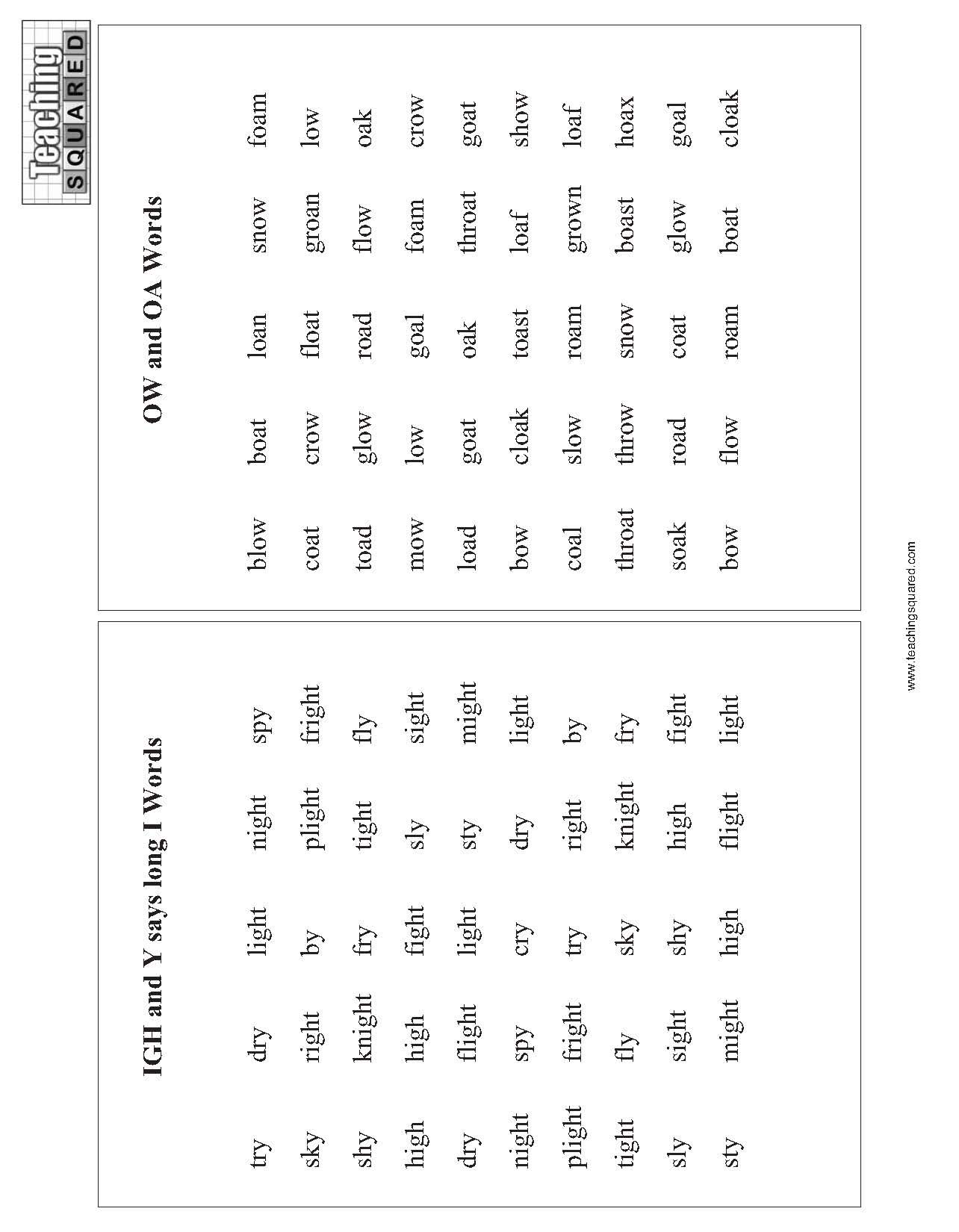
Complex Patterns for Long I and Long O Mastery
This advanced worksheet combines multiple vowel patterns, focusing on alternative ways to spell long I (IGH and Y) and long O (OW and OA). By grouping these patterns together, students see how English offers multiple spelling options for the same sounds. Part 16 develops pattern flexibility while building automaticity with these common but complex patterns.
What's Featured in This Worksheet:
- IGH Pattern: night, light, right, might, sight, bright, fight, flight, tight
- Y as Long I: my, by, try, fly, cry, sky, why, shy, dry, fry
- OW Pattern (long O): show, grow, know, slow, throw, yellow, follow
- OA Pattern: boat, coat, road, goat, soap, float, toast, coach
- Pattern position rules and exceptions
- Sentences mixing all four patterns
- Comparison with other long vowel spellings
Learning Benefits:
- ✓ Masters alternative long vowel spellings
- ✓ Develops pattern position awareness
- ✓ Builds flexibility with multiple spellings
- ✓ Strengthens advanced decoding skills
- ✓ Improves spelling-reading connections
- ✓ Increases sight vocabulary significantly
- ✓ Prepares for complex pattern recognition
Understanding the Four Patterns
IGH - The Silent Partners:
- Makes long I sound: /ī/
- GH is completely silent
- Usually appears at word endings or before T
- Memory tip: "I'm silent at night" (GH quiet)
Y as Long I - The Vowel Pretender:
- At the end of one-syllable words
- Acts like long I: /ī/
- Very common pattern
- Memory tip: "Y says I when flying high"
OW - The Double Duty Team:
- Can make long O: /ō/ (show, grow)
- Can make /ow/ sound (cow, how)
- This worksheet focuses on long O words
- Often at word endings
OA - The Reliable Long O:
- Almost always makes long O: /ō/
- Usually in the middle of words
- Very consistent pattern
- Memory tip: "OA floats in the boat"
Word Families and Examples
IGH Families:
- -ight: night, light, right, might, sight, bright, fight
- -igh: high, sigh, thigh
Y as I Words:
- Question words: why, by
- Action words: try, fly, cry, pry
- Describing words: shy, sly, dry
Long O Patterns:
- OW endings: show, grow, know, slow, yellow
- OA middles: boat, coat, road, soap, toast
Sample Mixed Pattern Sentences
- "My light might show the right road." (all four patterns)
- "Try to fly high in the bright sky." (Y and IGH focus)
- "The slow boat will float by the yellow lighthouse." (OW and OA)
- "Why did the goat fight at night on the boat?" (complex mix)
- "I might try to throw the coat to the coach." (advanced)
- "The shy boy knows the right way to row." (all patterns integrated)
Teaching Strategies for Pattern Groups
Grouping by Sound:
- Long I group: IGH and Y (my night)
- Long O group: OW and OA (show boat)
- Practice sound groups together
Position Awareness:
- Y and OW often at word endings
- IGH often before T or at endings
- OA usually in word middles
Visual Memory Aids:
- Draw a night sky for IGH words
- Use flying motions for Y words
- Draw boats for OA words
- Show growing plants for OW words
Common Challenges
- IGH Complexity: Three letters for one sound - practice as a unit
- Y Confusion: Sometimes long I, sometimes long E - focus context
- OW Sounds: Determining long O vs. /ow/ - provide word lists
- Pattern Overload: Four patterns at once - group by sound
Differentiation Strategies
For Struggling Readers: Teach patterns in sound pairs (IGH+Y, then OW+OA). Create pattern reference cards with pictures. Focus on most common words first. Use color coding for each pattern.
For Advanced Students: Explore OW words that make /ow/ sound. Find multi-syllable words with these patterns. Create pattern riddles or poems. Investigate why English has multiple spellings.
Assessment Focus Points
- Can student identify all four patterns visually?
- Does student know which sound each pattern makes?
- Can student decode unfamiliar words with these patterns?
- Is student developing spelling awareness?
- Does student maintain fluency with pattern-heavy text?
Building Advanced Pattern Recognition
This worksheet develops crucial skills:
- Recognizing that one sound has multiple spellings
- Using position clues to guide decoding
- Developing flexibility with English spelling
- Building larger sight vocabulary
Real-World Applications
These patterns appear in essential vocabulary:
- Time words: night, light, tonight
- Question words: why, by, my
- Movement words: fly, throw, float, row
- Common nouns: sky, road, boat, coat
Master advanced vowel patterns with this comprehensive worksheet - download now!