
Phonics Reading Drill Worksheets - Part 7: Ending Blends & Review Sentences
Mastering Final Consonant Blends for Complete Word Decoding
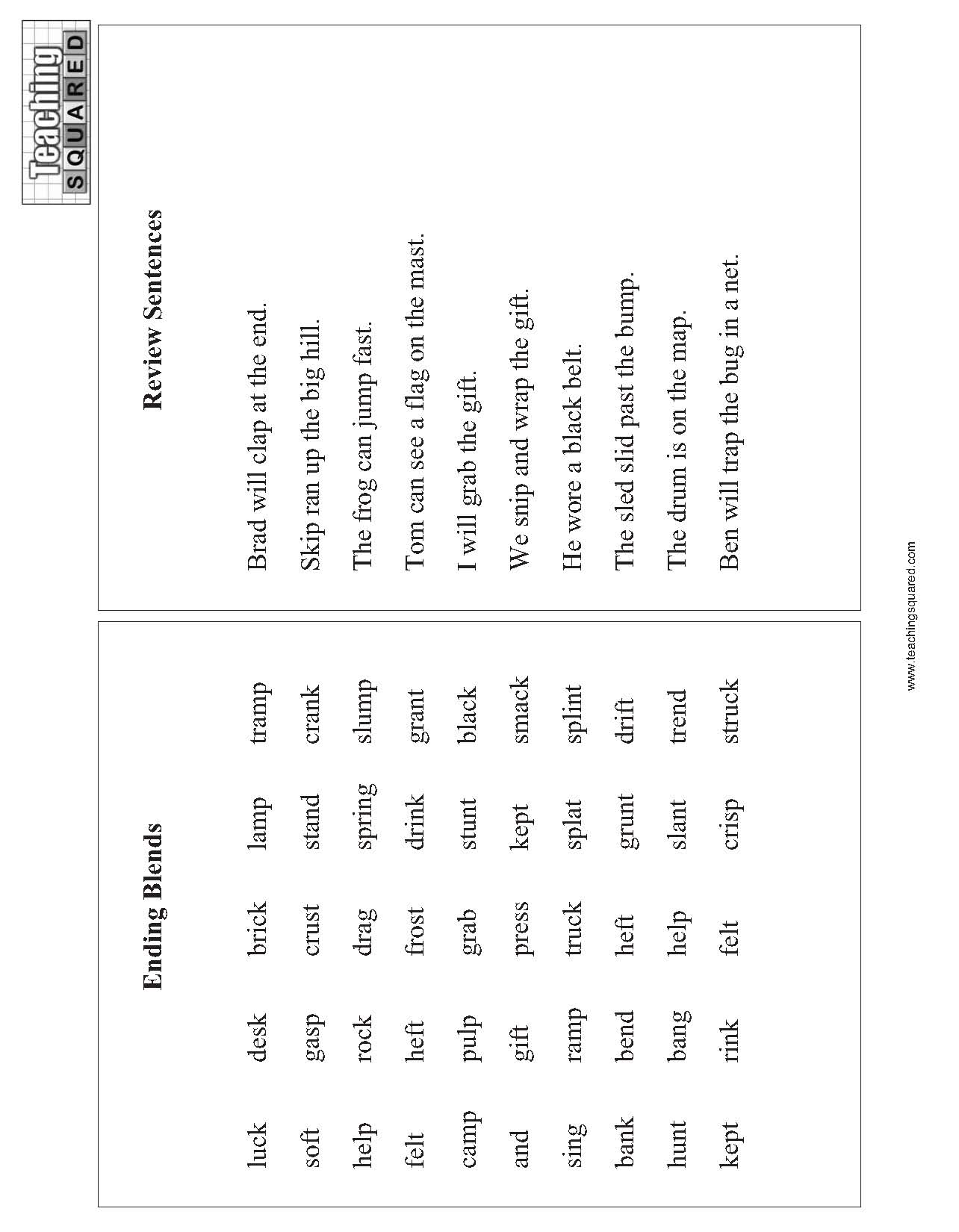
Completing the Blend Journey: Final Consonant Blends
This comprehensive worksheet introduces ending consonant blends, completing students' blend knowledge. By mastering both beginning and ending blends, readers can decode increasingly complex words with confidence. Part 7 combines ending blend instruction with sentence practice, reinforcing skills through meaningful context while building toward independent reading.
What's Featured in This Worksheet:
- -st Blends: Words like fast, best, lost, must, list
- -nd Blends: Words like hand, send, find, pond, sound
- -nt Blends: Words like went, plant, front, hunt, print
- -mp Blends: Words like jump, camp, lamp, bump, stamp
- -ft/-pt Blends: Words like left, soft, kept, slept
- -nk/-ng Blends: Words like think, bank, ring, long
- Sentences combining beginning and ending blends
- Multi-syllable words with blend patterns
Learning Benefits:
- ✓ Completes consonant blend instruction
- ✓ Develops skills for decoding complex words
- ✓ Builds reading fluency with blend combinations
- ✓ Strengthens phonemic awareness at word endings
- ✓ Improves spelling of common word patterns
- ✓ Prepares for multi-syllable word reading
- ✓ Enhances comprehension with varied sentence structures
Teaching Ending Blends Effectively
Key Concept: Unlike beginning blends where sounds flow forward, ending blends require students to hold vowel sounds and add consonant combinations. This "backward blending" skill needs explicit instruction.
Introduction Sequence:
- Week 1: Start with -st and -nd (most common)
- Week 2: Add -nt and -mp (clear sound differences)
- Week 3: Introduce -nk and -ng (nasal sounds)
- Week 4: Practice all blends in mixed contexts
Sample Sentences Featuring Ending Blends
- "The fast ant went up the plant." (beginning + ending blends)
- "Frank must jump and land on the soft sand." (multiple ending blends)
- "The band went to camp and slept in a tent." (variety of patterns)
- "Think fast and find the lost ring behind the desk." (complex blend combinations)
Teaching Strategies for Success
Backward Building Technique: Start with the ending and build backward. For "jump": say "-mp", then "ump", then "jump". This helps students hear the blend clearly.
Blend Contrast Activities:
- Compare words: "win" vs. "wind" - what does the blend add?
- Minimal pairs: "ten/tent", "ban/band", "win/wink"
- Stretch and blend: Hold the vowel sound, then add the blend
Visual Support: Use arrows pointing to the end of words. Color-code ending blends differently from beginning blends. Create blend wheels showing all words with same ending.
Common Challenges with Ending Blends
- Dropping Final Sounds: Students say "han" for "hand" - use tapping for each sound
- -ng/-nk Confusion: Practice the tongue position difference explicitly
- Speed Reading Errors: Slow down and emphasize careful decoding
- Spelling Challenges: Use sound boxes to visualize each phoneme
Differentiation Approaches
For Struggling Readers: Focus on one ending blend family per week. Use word families (camp, damp, lamp, stamp). Provide tactile letters for blend building.
For Advanced Students: Introduce words with double blends (blast, frost). Challenge with three-syllable words containing blends. Have them create blend poetry.
Assessment Focus Areas
- Can student identify ending blend sounds in spoken words?
- Does student decode ending blends accurately while reading?
- Can student spell words with ending blends correctly?
- Is reading fluency maintained with blend-heavy sentences?
- Does student self-correct when missing ending sounds?
Reinforcement Activities
Blend Hunt: Find objects in the classroom ending with target blends (desk, plant, lamp). Blend Stories: Write stories using as many ending blend words as possible. Rhyme Time: Create rhyming words with same ending blends (jump, bump, dump).
Building Reading Confidence
This worksheet marks a significant milestone - students who master ending blends can decode approximately 80% of single-syllable words in English! Celebrate this achievement while preparing for the next challenges: digraphs, vowel teams, and multi-syllable words.
Complete your students' blend mastery with ending blends - download this essential worksheet now!